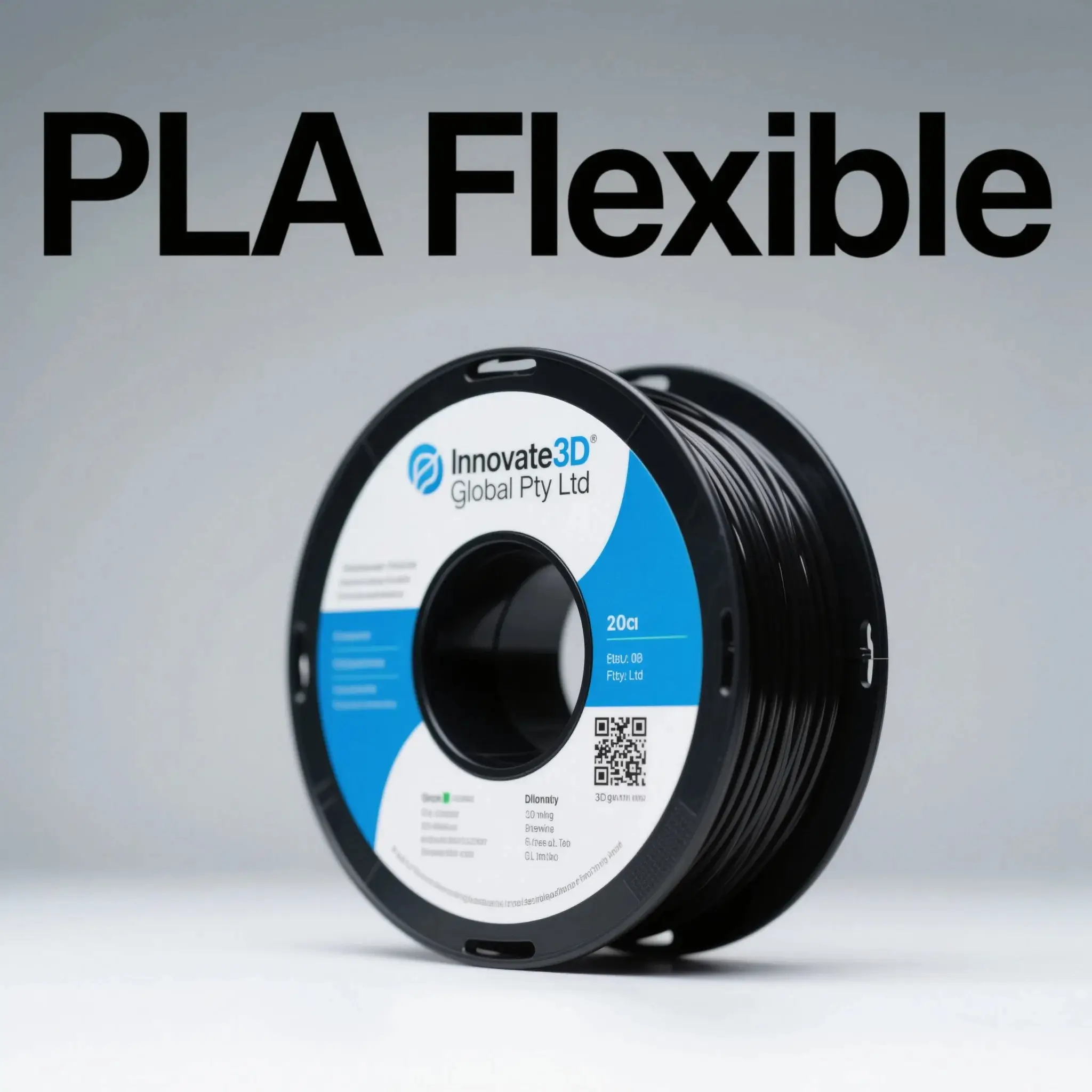
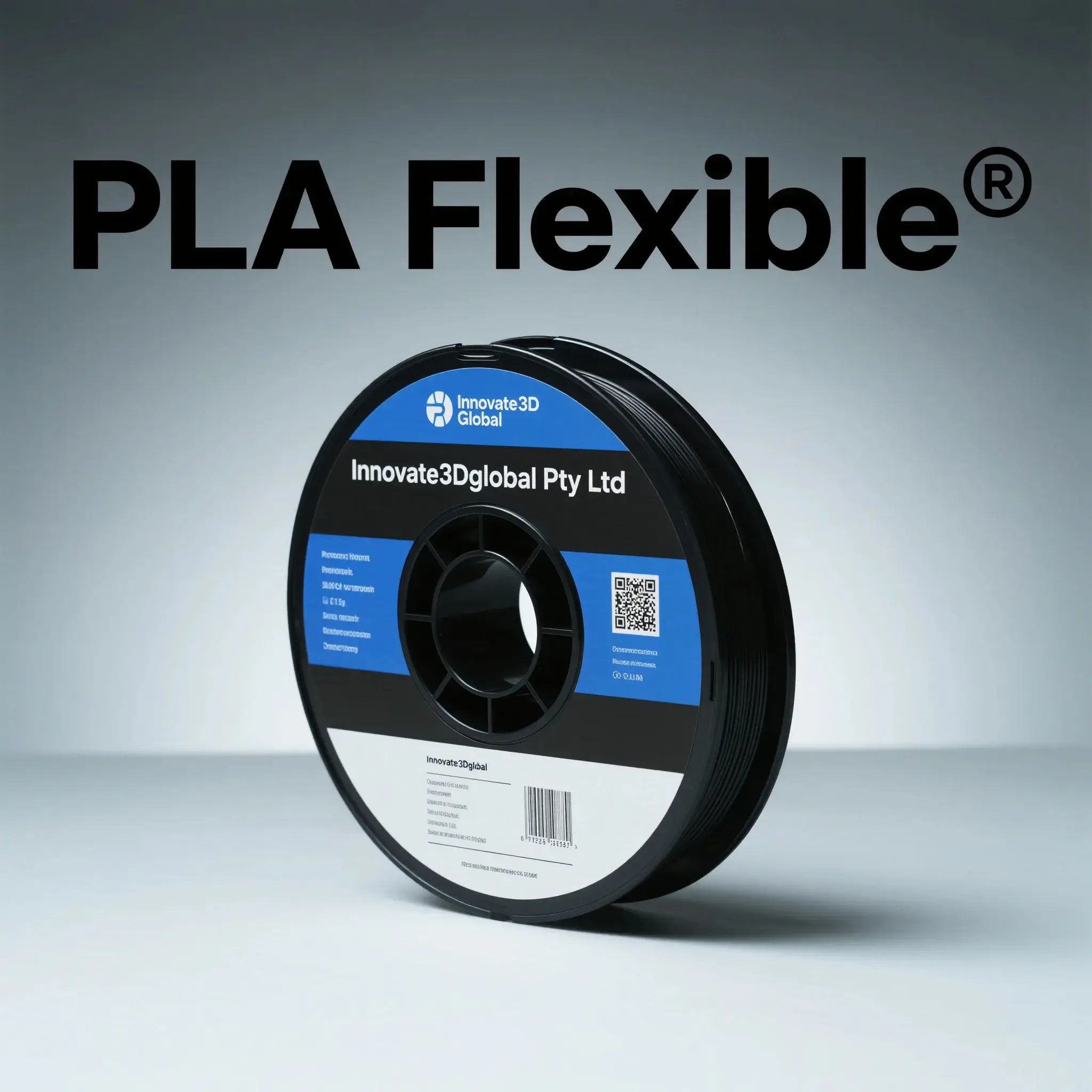
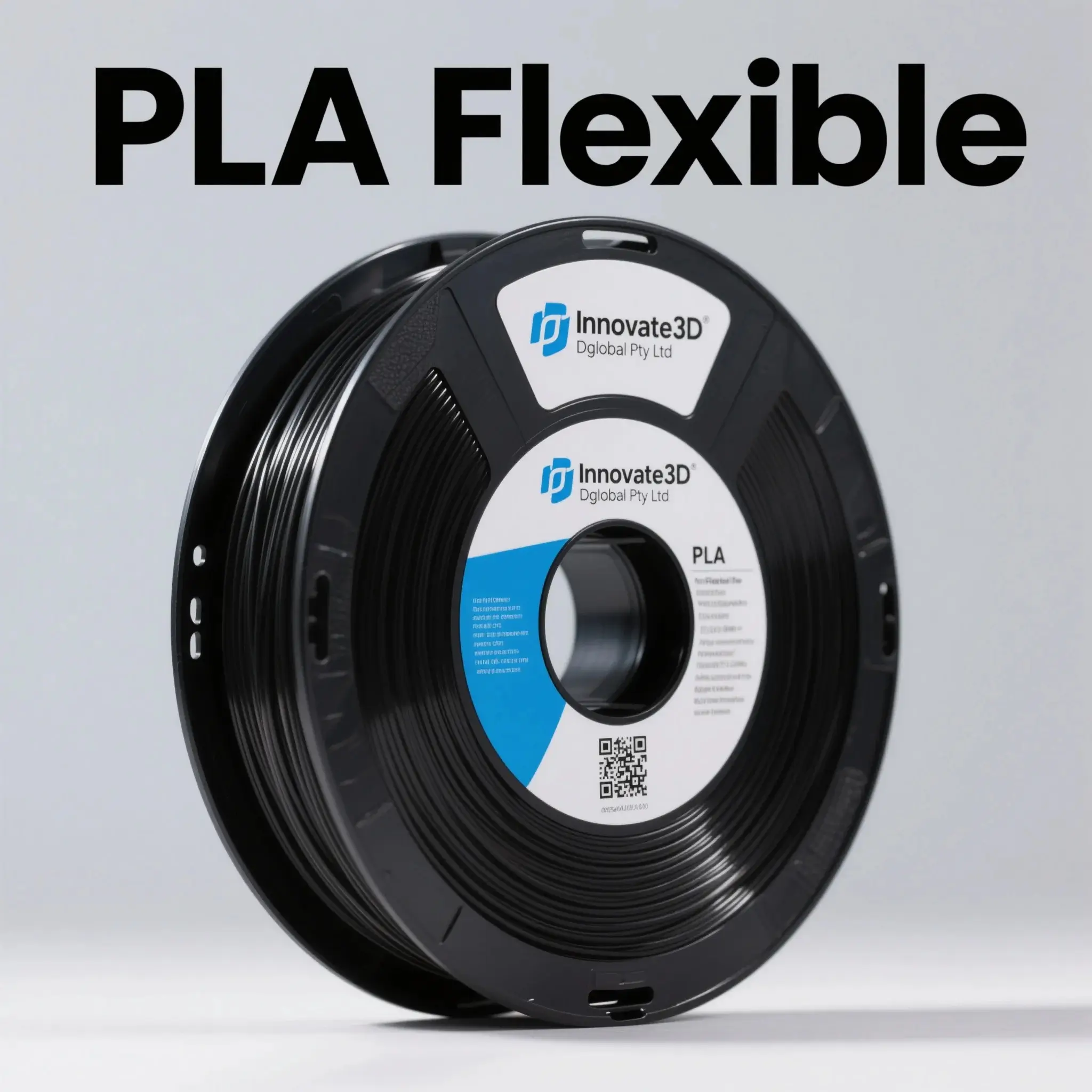
Premium PLA Flexible for High-Performance, Soft, and Durable 3D Printing Across the USA, UK, Germany, France, Australia & the European Union
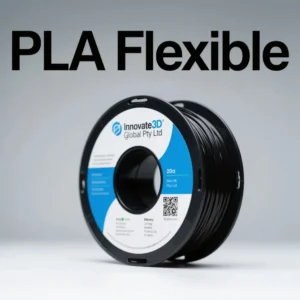
PLA Flexible is a next-generation flexible PLA filament engineered for creators, designers, engineers, educators, and manufacturers looking for soft elasticity, excellent surface quality, and easy printability without the complexity of TPU.
This advanced formula delivers the ideal balance between flexibility and structural strength, making it a top choice for hobbyists and professionals across the USA, UK, Germany, France, Australia, and the European Union. See Silver3D
PLA Flexible prints smoothly on most 3D printers without modification, making it perfect for schools, engineering labs, makerspaces, creative studios, R&D facilities, and home users worldwide.
Key Features & Benefits
-
Soft, flexible, and bendable material with superior elasticity
-
Easier to print than TPU, perfect for beginners and experts
-
Low warpage and stable printing performance
-
Excellent layer adhesion for durable and consistent results
-
Low odour, suitable for indoor printing in homes, offices & classrooms
-
Compatible with nearly all 3D printers used across the USA, UK, EU & Australia
-
Great for both functional parts and creative designs
Ideal Applications
PLA Flexible is widely used globally for:
-
Flexible hinges, joints & snap-fit components
-
Wearable items (bands, straps, accessories)
-
Grips, handles & soft-touch ergonomic components
-
Bumpers, vibration-damping mounts & protective parts
-
Toys, figurines & artistic models needing flexibility
-
Educational & prototyping environments
-
Robotics & mechanical testing components
Technical Specifications
(Generalised flexible PLA values — customizable if you provide your TDS.)
Physical Properties
| Property | Typical Value | Notes |
|---|---|---|
| Density | ~1.20–1.24 g/cm³ | Comparable to PLA+ with added elasticity agents |
| Surface Finish | Smooth / Satin | Soft-touch, flexible texture |
| Hardness | Soft | More rigid than TPU 95A, softer than PLA |
Mechanical Properties
| Property | Typical Value | Notes |
|---|---|---|
| Tensile Strength | Medium | Suitable for semi-flexible parts |
| Elongation at Break | High | Excellent flexibility and bending resistance |
| Impact Resistance | Improved vs regular PLA | Suitable for functional prototypes |
| Flexural Modulus | Low–Moderate | Enables smooth bending |
Thermal Properties
| Property | Typical Value | Notes |
|---|---|---|
| Printing Temperature | 200–220°C | Ensures consistent extrusion |
| Bed Temperature | 40–60°C | Optional but recommended |
| Softening Point | ~55–60°C | Similar to PLA materials |
Recommended 3D Printing Parameters
| Setting | Recommended Value |
|---|---|
| Nozzle Temperature | 200–215°C |
| Bed Temperature | 45–60°C |
| Print Speed | 30–50 mm/s |
| Retraction | Low (1–3 mm) |
| Cooling Fan | 100% (for best detail) |
| Nozzle Size | 0.4–0.6 mm |
These settings ensure optimal softness, surface uniformity, and excellent flow performance.
Why Choose PLA Flexible for the USA, UK, Germany, France, Australia & the EU?
🇺🇸 USA
-
Ideal for engineering schools, universities & makerspaces
-
Reliable for small businesses producing functional prototypes
-
Compatible with major US printers like Bambu Lab, Prusa, Creality, LulzBot
🇬🇧 United Kingdom
-
Stable performance in indoor environments
-
Perfect for design agencies, robotics clubs & educational institutions
🇩🇪 Germany
-
Excellent dimensional accuracy for engineering & manufacturing applications
-
High-quality filament trusted by prototyping labs and automotive R&D teams
🇫🇷 France
-
Great for creative studios, art schools, and architectural model makers
-
Smooth finish ideal for design-focused printing
🇦🇺 Australia
-
Low-odour material perfect for home, school, or workshop use
-
Reliable print performance in varying climate conditions
🇪🇺 European Union
-
Complies with EU filament standards for safety & print consistency
-
Ideal for mass prototyping, educational programs, and research centers
SEO Keywords Included
USA SEO Keywords
-
Flexible PLA filament USA
-
Soft PLA 3D printing material United States
-
Flexible 3D filament for makers & engineers USA
UK SEO Keywords
-
Flexible PLA filament UK
-
Soft PLA 3D printing material London
-
Bendable PLA filament for schools & labs UK
Germany SEO Keywords
-
Flexibles PLA Filament Deutschland
-
Weiches PLA 3D Druckmaterial
-
PLA flexibel Filament für Ingenieure
France SEO Keywords
-
PLA Flexible filament France
-
Matériau PLA souple impression 3D
-
Filament PLA flexible haute qualité France
Australia SEO Keywords
-
Flexible PLA filament Australia
-
Soft PLA 3D printing material Sydney
-
Flexible PLA for creative printing in Australia
European Union SEO Keywords
-
Flexible PLA filament EU
-
Soft PLA 3D printing material Europe
-
Flexible PLA for engineering & creative projects EU
Summary
PLA Flexible | Superior Quality for 3D Filaments delivers the perfect blend of softness, durability, and printability, making it ideal for both artistic and functional applications across the USA, UK, Germany, France, Australia, and the European Union. Its versatility, low warpage, and strong layer bonding make it a must-have for anyone seeking a dependable flexible printing material.
FAQ – PLA Flexible | Superior Quality for 3D Filaments
(USA, UK, Germany, France, Australia & EU)
1. What is PLA Flexible?
PLA Flexible is an enhanced version of traditional PLA designed to offer soft elasticity, improved impact resistance, and smooth printability. It provides flexibility similar to semi-rigid materials while remaining much easier to print than TPU. It is widely used in the USA, UK, Germany, France, Australia, and the EU.
2. How does PLA- Flexible compare to TPU?
PLA Flexible offers many of TPU’s advantages but with easier printing:
-
Requires no special extruder
-
Produces cleaner, more accurate prints
-
Less stringing and clogging
-
Faster printing speeds
-
Ideal for beginners
For users in European countries, the UK, Australia, and the USA, PLA Flexible is perfect when TPU is too difficult or time-consuming.
3. What printers are compatible with PLA- Flexible?
PLA Flexible works on most open-material 3D printers, including:
-
USA: Prusa, Creality, Bambu Lab, MakerBot
-
UK: Anycubic, Flashforge, CEL Robox
-
Germany: Ultimaker, Raise3D, Zortrax
-
France: Dagoma, Volumic, Artillery
-
Australia/EU: Prusa, Creality, Flashforge, Qidi, and more
No hardware modifications are required.
4. What are the ideal applications for PLA Flexible?
PLA Flexible is perfect for:
-
Wearable items (straps, bands, apparel accessories)
-
Flexible hinges & snap-fit connections
-
Vibration dampeners
-
Soft ergonomic handles and grips
-
Bumpers and protective parts
-
Custom toys and art pieces
-
Robotics & functional prototypes
-
Educational project models
These applications make it popular across global markets such as the EU engineering sector, US makerspaces, UK design agencies, and Australian schools.
5. What printing settings are recommended?
| Setting | Recommended Range |
|---|---|
| Nozzle Temperature | 200–215°C |
| Bed Temperature | 45–60°C |
| Print Speed | 30–50 mm/s |
| Retraction | Low (1–3 mm) |
| Cooling Fan | 100% |
| Adhesion | PEI, tape, glue stick optional |
These settings ensure soft, consistent, and reliable results worldwide.
6. Is PLA Flexible suitable for beginners?
Yes. PLA Flexible is one of the most beginner-friendly flexible filaments in the USA, UK, EU, Germany, France, and Australia. It prints easily without the feeding issues associated with TPU.
7. Does PLA Flexible require an enclosure?
No. PLA Flexible prints extremely well without an enclosure, making it ideal for home users, classrooms, and labs.
8. Is PLA Flexible strong enough for functional parts?
Yes—PLA Flexible provides:
-
Good tensile strength
-
High elongation
-
Great impact resistance
-
Reliable layer adhesion
It is ideal for light and medium-duty flexible components.
9. How should PLA -Flexible be stored in different global climates?
Humidity affects all flexible materials. Proper storage is recommended:
-
Store in an airtight bag or dry box
-
Use silica gel packs
-
Keep away from heat and direct sunlight
This is helpful for humid regions like Australia, cold regions like Germany, or variable climates in the USA and EU.
10. Is PLA -Flexible safe for indoor use?
Yes. PLA Flexible produces low odour and is safe for:
-
Offices (USA, UK)
-
Homes & apartments
-
Educational institutions
-
Laboratories
-
Makerspaces across Australia and Europe
It is a plant-based material and does not release harmful fumes like ABS.
11. Is PLA -Flexible recyclable or biodegradable?
PLA Flexible is made from renewable resources, making it more eco-friendly than petroleum plastics. Though not home-compostable, it aligns with European sustainability standards.
12. Can PLA Flexible be used in multi-material prints?
Yes, it works well with:
-
PLA
-
PLA+
-
Breakaway supports
-
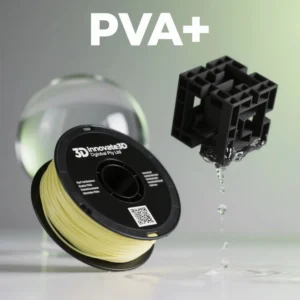
PVA (dissolvable in water)
Perfect for complex designs and multi-material prototypes.
13. Does PLA- Flexible shrink or warp?
PLA Flexible has very low warpage, making it ideal for:
-
Large flat prints
-
Precision components
-
Multi-part assemblies
A heated bed improves adhesion but is not always required.
14. Can PLA-Flexible be sanded, painted or finished?
Yes. PLA Flexible can be:
-
Lightly sanded
-
Primed
-
Painted with acrylic paints
-
Coated for improved finish
This is useful for artistic creators in the USA, France, and the UK.
15. Where can I buy PLA Flexible?
PLA Flexible is widely available through online and local distributors across:
-
USA & Canada
-
United Kingdom
-
Germany & European Union
-
France
-
Australia & New Zealand
Many suppliers offer fast shipping across Europe, North America, and APAC regions.