
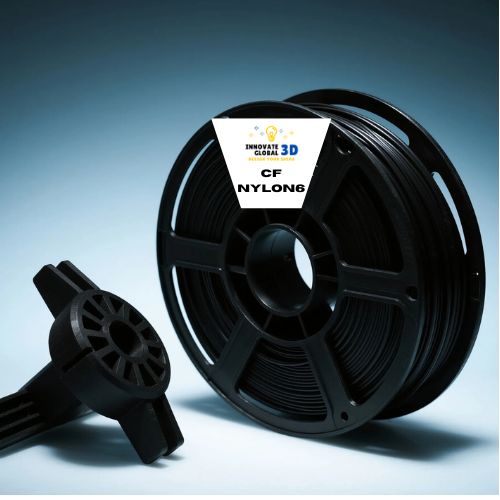
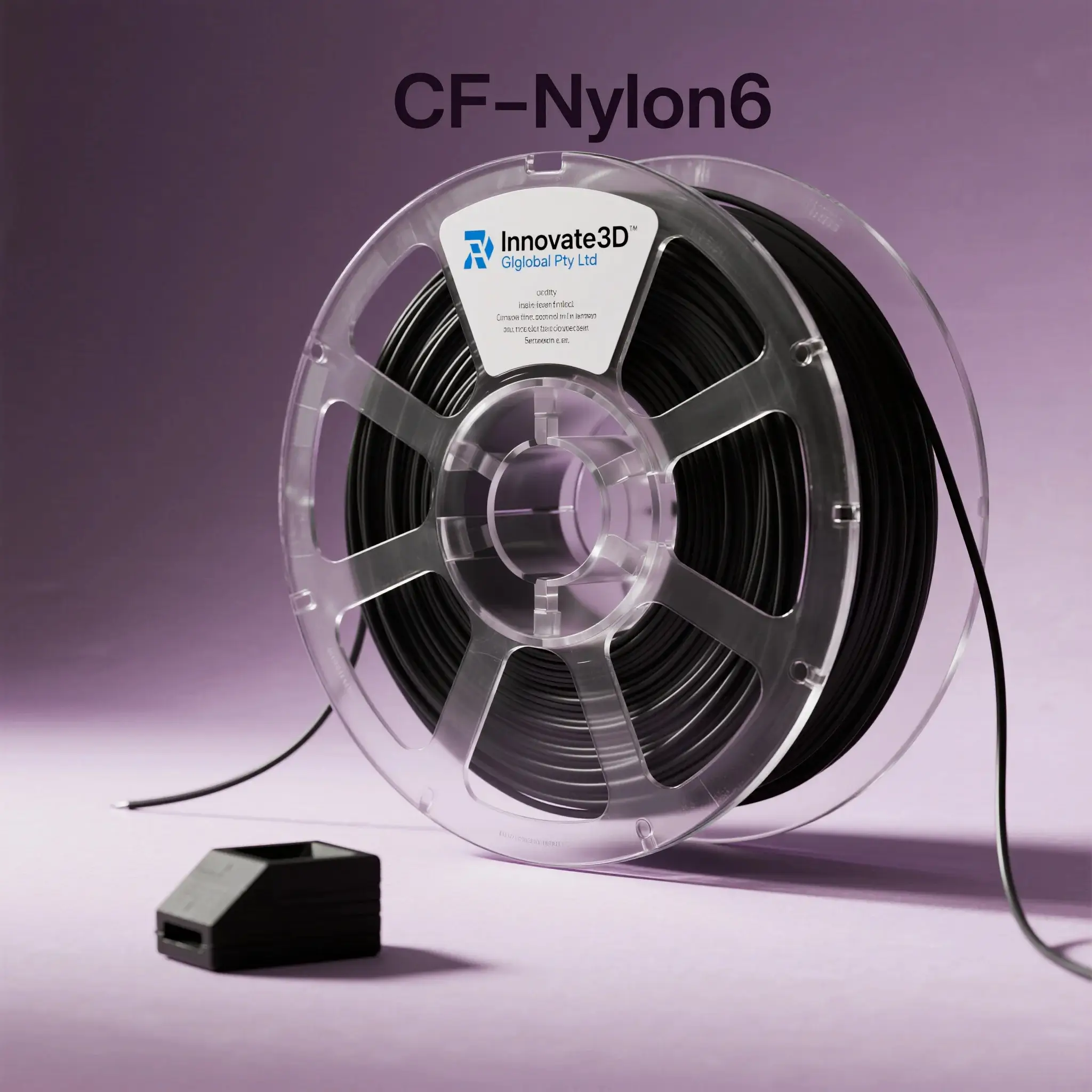
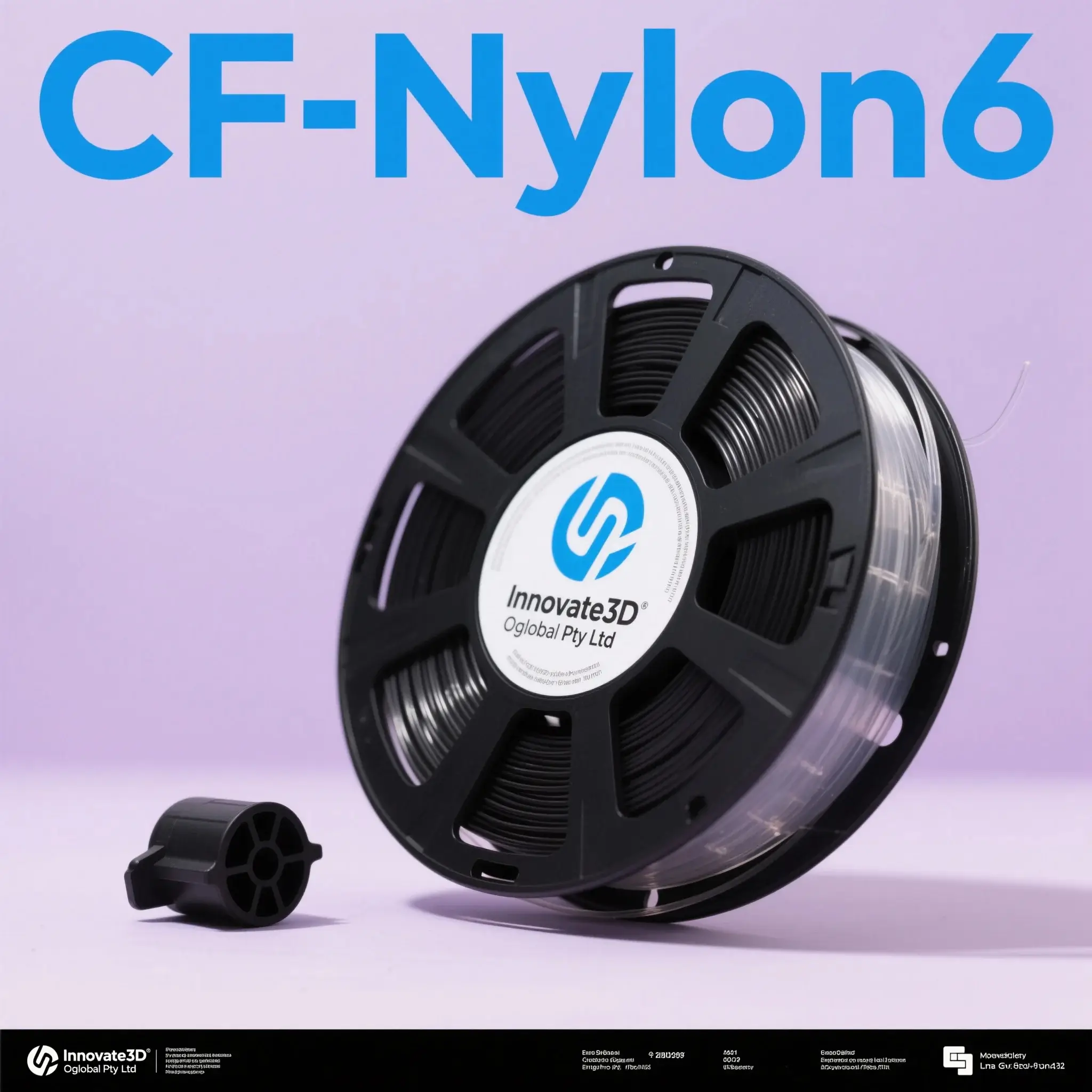
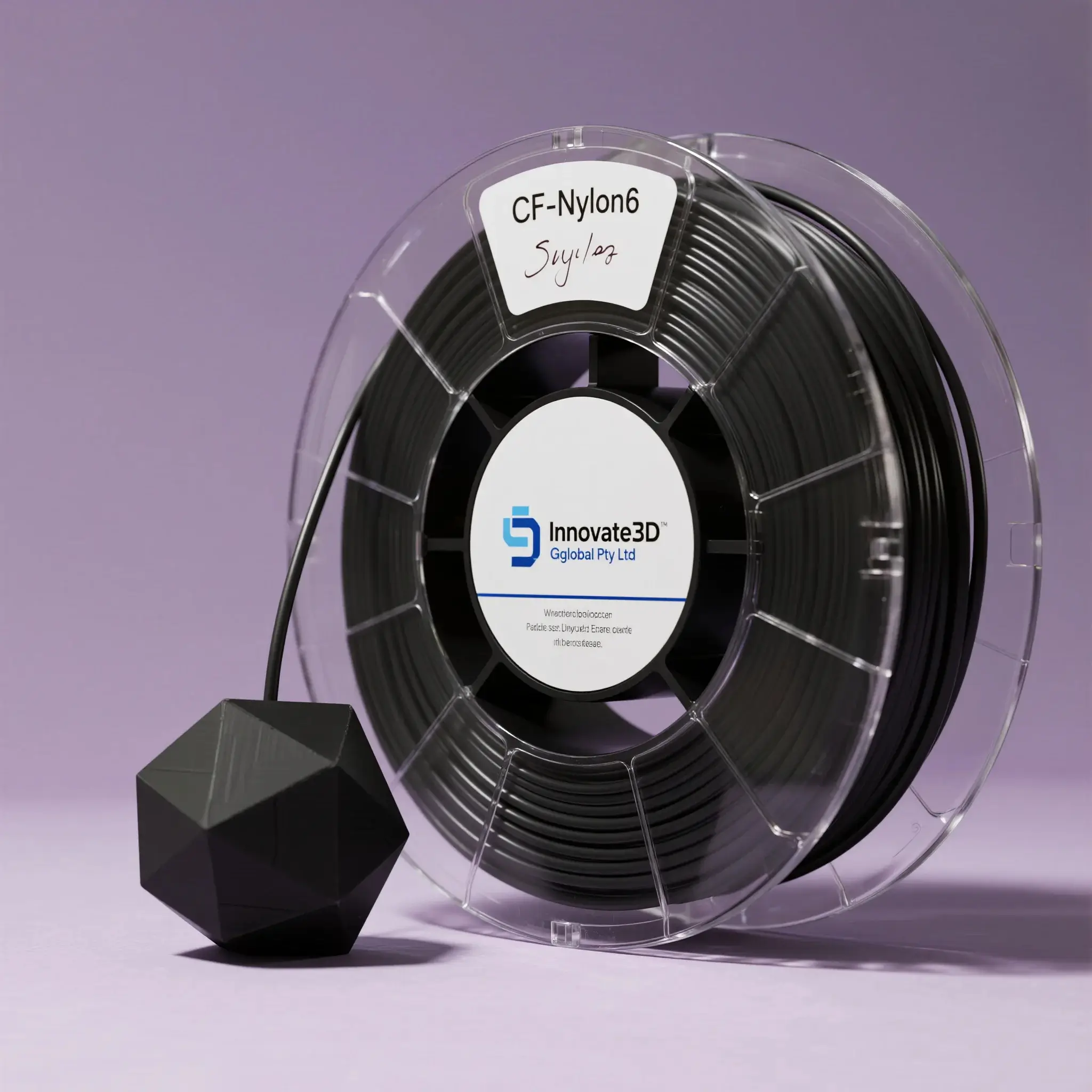
CF-Nylon, engineered with reinforced composite performance, delivers exceptional tensile strength, high impact resistance, and excellent dimensional stability. Ideal for demanding Australian environments—from industrial workshops in Sydney to manufacturing hubs in Melbourne, Brisbane, Perth, and Adelaide—this filament provides the durability needed for professional-grade functional parts.
Formulated as a high-strength composite filament with glass-fibre reinforcement, CF-Nylon is perfect for load-bearing components, automotive prototypes, mechanical parts, and rugged engineering applications. See Silver3D
Key Features
-
Reliable high-strength composite with enhanced rigidity
-
Glass-filled reinforcement for superior load performance
-
High impact resistance for durable, functional parts
-
Low-warpage formulation for precision printing
-
Outstanding performance across Australian climates
Recommended Applications
-
Engineering prototypes & mechanical assemblies
-
Industrial components for Sydney, Melbourne, Brisbane, WA & SA
-
Functional parts requiring toughness & stiffness
-
Toys, gifts, cultural & creative models
-
Automotive brackets, jigs, tooling, and fixtures
(From PA-GF10 Technical Data Sheet)
TDS – Nylon-GF Filament
Technical Specifications
Physical Properties
| Property | Typical Value | Unit | Method | Test Condition |
|---|---|---|---|---|
| Density | 1.16 | g/cm³ | ISO 1183 | 23 °C |
| Melt Flow Rate | 3.6 | g/10 min | ISO 1133 | 235 °C / 2.16 kg |
TDS – Nylon-GF Filament
Mechanical Properties
| Property | Value | Unit | Method | Condition |
|---|---|---|---|---|
| Tensile Strength (XY) | 56 | MPa | ISO 527 | 50 mm/min |
| Elongation at Break | 18 | % | ISO 527 | 50 mm/min |
| Flexural Strength (XY) | 71 | MPa | ISO 178 | 5 mm/min |
| Flexural Modulus (XY) | 2200 | MPa | ISO 178 | 5 mm/min |
| Flexural Strength (Z) | 55 | MPa | ISO 178 | 5 mm/min |
| Flexural Modulus (Z) | 1428 | MPa | ISO 178 | 5 mm/min |
| Unnotched Izod Impact (XY) | 19 | kJ/m² | ISO 180 | 23 °C |
| Unnotched Izod Impact (Z) | 14 | kJ/m² | ISO 180 | 23 °C |
TDS – Nylon-GF Filament
Thermal Properties
| Property | Value | Unit | Method | Condition |
|---|---|---|---|---|
| Melting Temperature | 195 | °C | DSC | 10 °C/min |
| Heat Deflection Temperature | 94 | °C | ASTM D648 | 120 °C/h, 0.45 MPa |
TDS – Nylon-GF Filament
3D Printing Parameters (Optimised for Australia)
| Parameter | Value |
|---|---|
| Printing Temperature | 220–260 °C |
| Bed Temperature | 80–100 °C |
| Recommended Nozzle Temperature (Test) | 260 °C |
| Plate Temperature (Test) | 100 °C |
| Print Speed | 100 mm/s |
| Infill Density | 100% |
TDS – Nylon-GF Filament
Why Choose CF-Nylon in Australia?
-
Rated as a reliable high-strength composite filament for engineering
-
Reinforced with glass fibres for superior rigidity & load capacity
-
Performs consistently in NSW, VIC, QLD, WA, and SA industrial conditions
-
A top choice for industrial nylon filament in Sydney, Melbourne & Brisbane
-
Excellent for professional manufacturers, engineers, and product developers
1. What is CF-Nylon filament?
CF-Nylon is a high-strength composite filament reinforced with glass fibres, designed for durable and functional 3D-printed parts. It offers excellent stiffness, impact resistance, and reliability, making it ideal for engineering applications across Australia.
2. Is CF-Nylon filament suitable for Australian conditions?
Yes. CF-Nylon performs exceptionally well in Australian climates, including humid regions like Brisbane, coastal environments near Sydney, and hot manufacturing spaces across NSW, VIC, and WA. Its low warpage and reinforced structure ensure consistent print quality.
3. What applications is CF-Nylon ideal for in Australia?
Common uses of CF-Nylon filament Australia include:
-
Industrial jigs, fixtures & mechanical components
-
Automotive and robotics prototypes
-
Strong, load-bearing engineering parts
-
Creative and cultural designs
-
Functional prototypes for manufacturers in Sydney, Melbourne, and Brisbane
4. Why choose CF-Nylon over standard nylon filaments?
CF-Nylon delivers:
-
Higher stiffness due to glass-fiber reinforcement
-
Improved dimensional stability
-
Better impact resistance and strength
-
Reduced warpage compared with unfilled nylon
This makes it the preferred industrial nylon filament in Australia for professional engineering applications.
5. What are the recommended print settings for CF-Nylon?
From the Technical Data Sheet
TDS – Nylon-GF Filament
Nozzle Temperature: 220–260°C
-
Bed Temperature: 80–100°C
-
Best Performance Test Temperature: 260°C
-
Print Speed: 100 mm/s
These settings ensure optimal mechanical strength and print quality.
6. Can CF-Nylon be used for industrial production in NSW or Victoria?
Absolutely. CF-Nylon is widely used in NSW manufacturing, Victorian prototyping workshops, and industrial facilities across Australia. Its high mechanical performance makes it suitable for demanding production environments.
7. Does CF-Nylon filament absorb moisture in Australia’s climate?
Like most nylon materials, CF-Nylon can absorb moisture over time, especially in humid locations such as Queensland. Storing it in a dry box or sealed vacuum bag is recommended for the best results.
8. Is CF-Nylon suitable for outdoor use in Australia?
While CF-Nylon offers good durability, the printed parts may require additional coatings for long-term UV exposure, especially in sunny regions like Western Australia. For structural outdoor parts, it performs well due to its strength and rigidity.
9. Is CF-Nylon good for professional engineering prints?
Yes. CF-Nylon is a professional-grade composite filament used for reliable, high-strength parts in engineering, automotive, and industrial applications throughout Australia.
10. Where can I purchase CF-Nylon filament in Australia?
CF-Nylon is available from 3D printing suppliers across Sydney, Melbourne, Brisbane, Adelaide, Perth and online stores servicing all states. If you’d like, I can help you create a supplier list or location-specific product page. If You like it ,Please order it Shop


Reviews
There are no reviews yet.