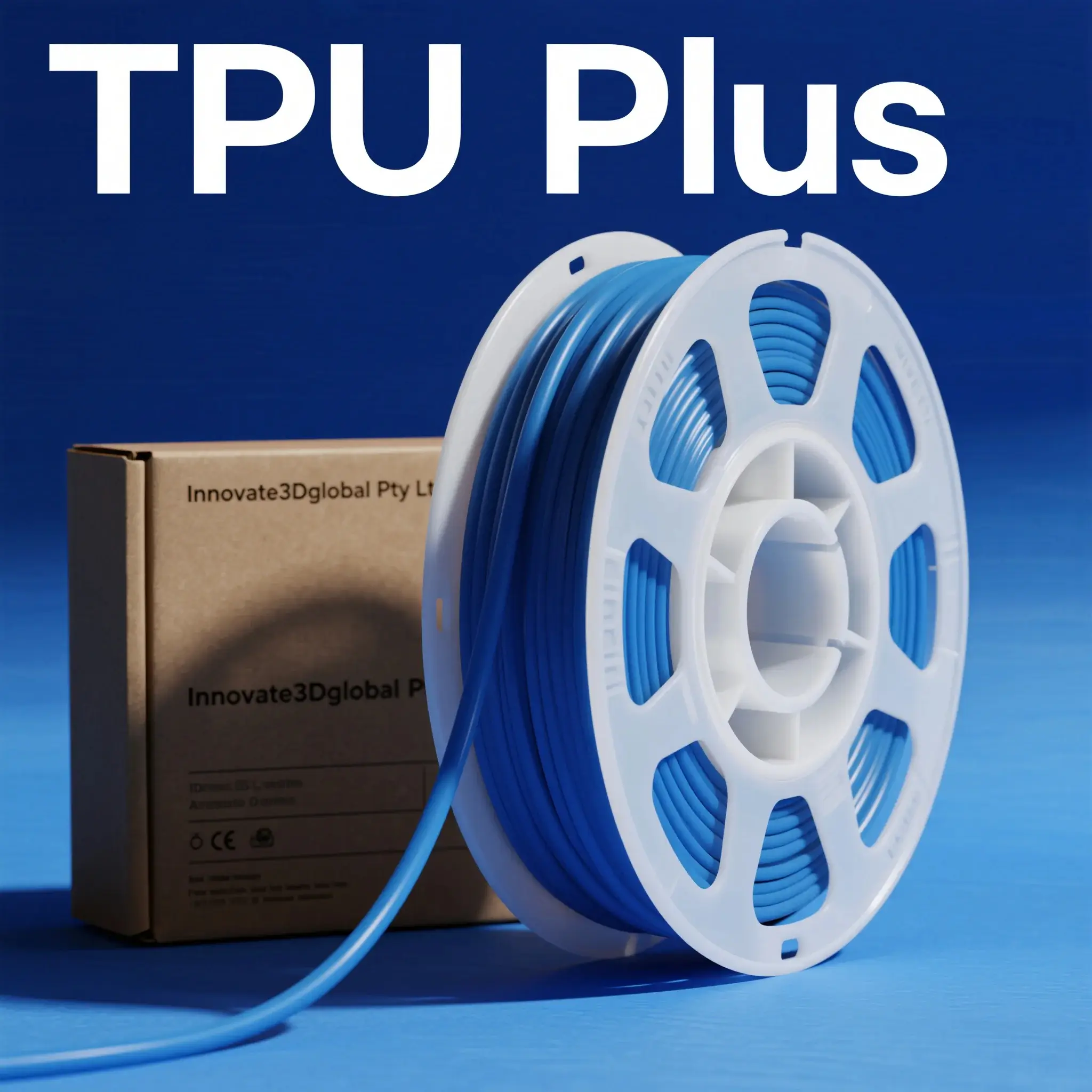
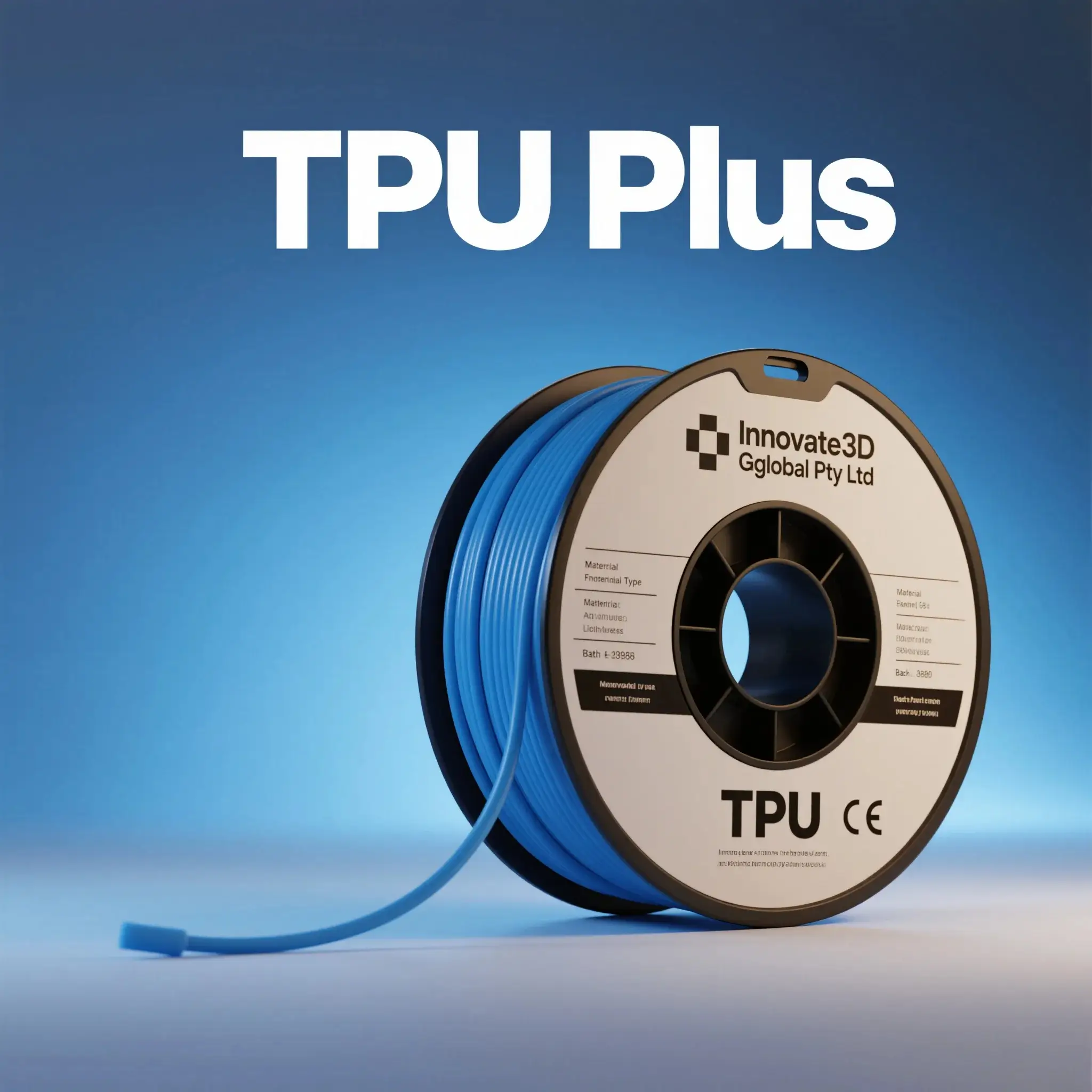
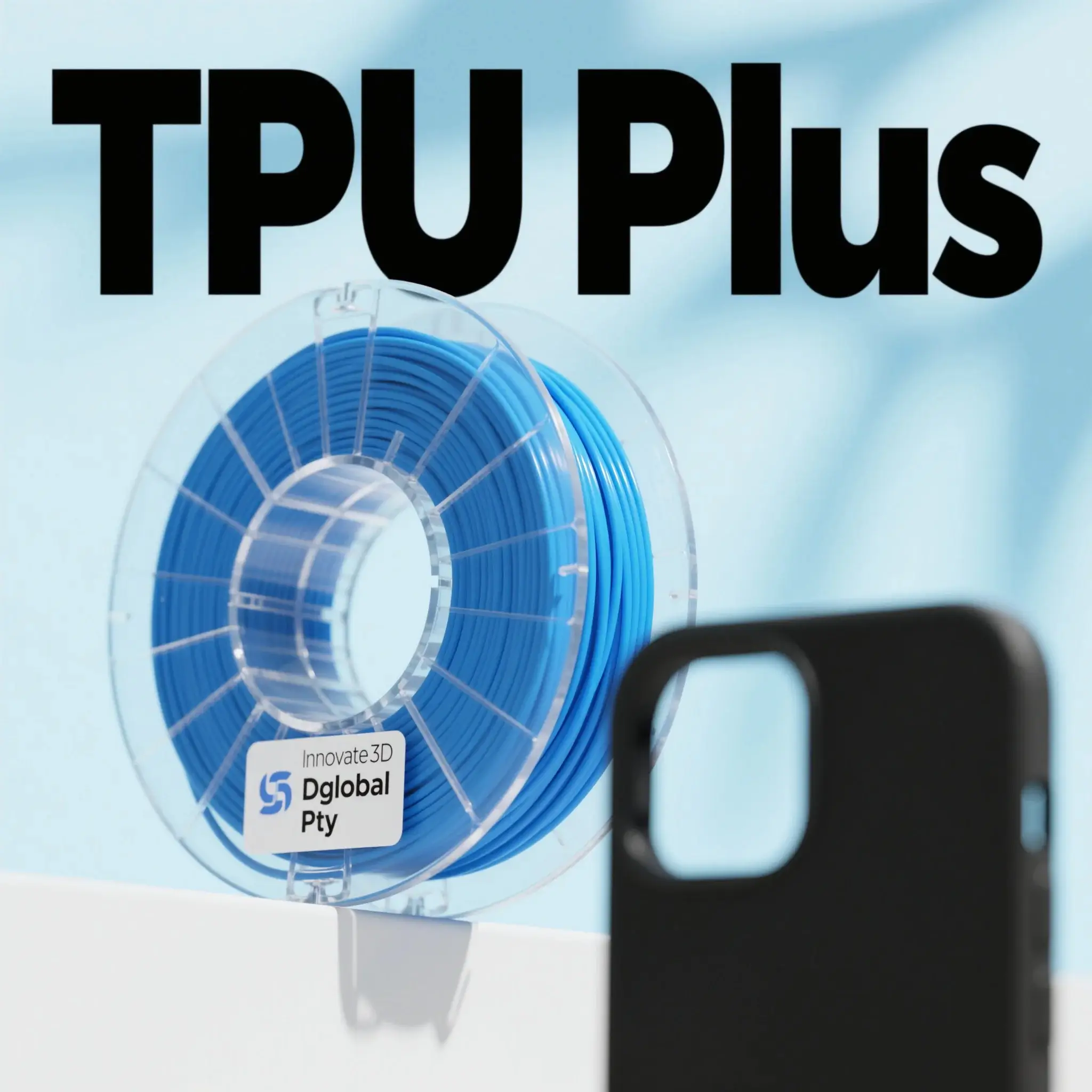
TPU Plus (TPU 98A) is a premium flexible filament engineered for creators, designers, and manufacturers across Australia who require high elasticity, excellent impact resistance, and smooth, reliable print performance. Its 98A Shore hardness provides the perfect balance between flexibility and strength, making it ideal for wearable products, cushioning components, prototypes, and functional parts used in Sydney, Melbourne, Brisbane, Perth, Adelaide, and NSW.
Designed to print with low odour, minimal warpage, and reliable layer bonding, TPU Plus is the go-to material for both consumer and industrial applications. See silver3D
Key Features
-
Premium elasticity for flexible and semi-rigid components
-
Impact-modified formulation for durability and shock absorption
-
Low odour for comfortable indoor printing
-
Low-warpage performance, ideal for precision applications
-
Compatible with most open-material 3D printers used across Australia
Recommended Applications
-
Wearable components & shoe materials
-
Flexible joints, hinges, and mechanical buffers
-
Protective covers, grips, and vibration-damping parts
-
Toys, gifts, and creative products
-
Functional prototypes used in NSW, VIC, QLD, WA & SA industries
(From TPU 98A Technical Data Sheet)
TDS – TPU 98A Filament
Technical Specifications
Physical Properties
| Property | Typical Value | Unit | Method | Test Condition |
|---|---|---|---|---|
| Density | 1.22 | g/cm³ | ISO 1183 | 23 °C |
| Melt Flow Rate | 4.5 | g/10 min | ISO 1133 | 190 °C / 2.16 kg |
TDS – TPU 98A Filament
Mechanical Properties
| Property | Typical Value | Unit | Method | Test Condition |
|---|---|---|---|---|
| Tensile Strength | 35 | MPa | ISO 527 | 50 mm/min |
| Elongation at Break | 500% | % | ISO 527 | 50 mm/min |
| Flexural Strength | 8 | MPa | ISO 178 | 5 mm/min |
| Flexural Modulus | 60 | MPa | ISO 178 | 5 mm/min |
| Unnotched Izod Impact Strength | Not Break | kJ/m² | ISO 180 | 23 °C |
TDS – TPU 98A Filament
Thermal Properties
| Property | Typical Value | Unit | Method | Condition |
|---|---|---|---|---|
| Melting Temperature | 168 | °C | DSC | 10 °C/min |
| Heat Deflection Temperature | — | °C | ASTM D648 | 120 °C/h, 0.45 MPa |
TDS – TPU 98A Filament
3D Printing Parameters (Optimised for Australia)
| Parameter | Value |
|---|---|
| Printing Temperature | 210–240 °C |
| Recommended Nozzle Temp (Test) | 215 °C |
| Bed Temperature | Not required / optional |
| Print Speed | 50 mm/s |
| Infill Density | 100% |
TDS – TPU 98A Filament
Why Choose TPU Plus in Australia?
-
Ideal for users needing premium flexible filament in Australia
-
Performs consistently in varying climates across NSW, QLD, VIC, WA & SA
-
Suitable for industrial-grade flexible components
-
Trusted by designers, creators, and manufacturers in Sydney, Melbourne, Brisbane and surrounding regions
-
Provides excellent durability for both consumer and engineering applications
FAQ – TPU Plus | Premium Flexible Filament (Australia)
1. What is TPU Plus and what makes it premium?
TPU Plus is a high-quality, 98A flexible filament designed for strong, elastic, and impact-resistant 3D prints. Its balance of strength and flexibility makes it ideal for both hobbyists and professional users across Australia.
2. Is TPU Plus suitable for Australian printing conditions?
Yes. TPU Plus performs reliably in a wide range of environments across NSW, VIC, QLD, WA, SA, thanks to its low warpage, low odour, and excellent temperature stability. It is well-suited for both home and industrial printers used in Sydney, Melbourne, Brisbane, and regional areas.
3. What can I print with TPU Plus in Australia?
Common applications include:
-
Wearables & shoe components
-
Phone cases, grips, flexible hinges
-
Shock-absorbing parts & vibration dampers
-
Toys, gifts & creative products
Its durability and elasticity make it popular for both consumer and industrial products.
4. What are the key advantages of TPU Plus over other flexible materials?
TPU Plus offers:
-
Excellent 500% elongation at break
-
Strong impact resistance (Not Break)
-
Low odour and smooth printing performance
-
Greater durability compared to soft PLA or many TPE blends
These benefits make it a top choice for TPU filament Australia customers seeking performance and reliability.
5. What are the recommended printing settings for TPU Plus?
From the technical data sheet:
-
Printing Temperature: 210–240°C
-
Recommended Nozzle Temp (Test): 215°C
-
Bed Temperature: Not required
-
Print Speed: 50 mm/s
-
Infill Density: 100%
These settings help achieve consistent flexibility and strong layer adhesion. - TDS – TPU 98A Filament
6. Does TPU + require a heated bed?
No. TPU Plus can be printed without a heated bed, making it highly convenient for home users and beginners throughout Australia.
7. Is TPU Plus easy to print compared to other TPUs?
Yes. TPU Plus is formulated for smooth extrusion and low warpage, giving better print stability than many standard TPU 95A or softer TPUs. Its 98A hardness also helps prevent filament buckling in Bowden setups.
8. Is TPU Plus suitable for industrial applications in Sydney, Melbourne, or Brisbane?
Absolutely. TPU Plus is widely used for industrial prototypes, functional parts, and production components in engineering workshops throughout Sydney, Melbourne, and Brisbane, thanks to its strength, elasticity, and impact resistance.
9. How should I store TPU + in Australian climates?
TPU absorbs moisture over time, especially in humid locations like Queensland. For best results:
-
Store in a sealed dry box
-
Use desiccant packs
-
Keep filament away from heat and moisture
Dry storage ensures optimal print quality and consistency.
10. Is TPU Plus safe to print indoors?
Yes. TPU Plus has low odour, making it suitable for indoor use. Adequate ventilation is still recommended for all 3D printing materials.